Wednesday, February 1, 2012

Here’s One of David Yow’s Lesser Known Projects: Los Angeles’s Qui


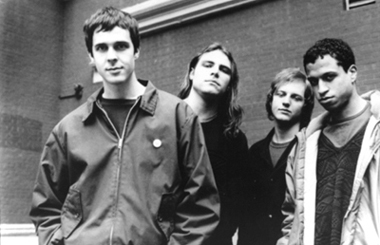
Qui were an experimental Noise Rock band from LA that formed in 2000; they released their first full length, Baby Kisses (Heart of a Champion Records) in 2003, and in 2006, David Yow of Scratch Acid and Jesus Lizard began performing live with the group, eventually joining the band as a permanent member. Around this time, the band joined Mike Patton’s label Ipecac Recordings to make their sophomore effort, Love’s Miracle (2007), the first release to feature Yow’s vocal work. It’s a noisy post-rock experiment that succeeds in many ways - pleasing the expectations of eager Yow enthusiasts. It’s more approachable than the more aggressive, dissonant work of J. Lizard or Scratch Acid. There’s mathy elements here as well with some stoner-like jams to top it off - just an all-around good album. Here’s the opening song, “Apartment”:


And here’s a live video of one of the album’s better, more Yow-inspired, tracks; it’s called “Belt”:


The album ends with a shortened cover of one of Pink Floyd’s greatest epic tracks, “Echoes” - an odd selection to end the Lp for a Yow-related Noise band... It’s awesome, however; check it out:


The group released some 7”s with David Yow as well. The best is the 2009 release, The Little Golden Blanket (Infrasonic Records), a two song single that captures the group’s creative peak with the legendary Yow. Definitely check it out as well, if you can find it..... Enjoy!

David Yow says, "Enjoy the Noise!!!"

Sunday, January 29, 2012

More Eno Diaries: Roxy Music’s For Your Pleasure (1973) & John Cale’s Slow Dazzle (1975)

Here’s a couple more gems featuring the work of Brian Eno.  The latter pick is another great John Cale album from his Island Records years, but first let’s look at Eno’s best work with Glam Rock giants, Roxy Music.


Eno of the Roxy days
Roxy Music was formed by frontman, Bryan Ferry, in 1971; next to Bolan and Bowie, Ferry was one of the great Glam Rock giants of the 70s and early 80s.  Brian Eno joined Ferry’s group shortly after its inception; he played synthesizer and provided “treatments” for the the band’s first two full lengths, Roxy Music (1972 Island/Polydor Records) and For Your Pleasure (1973 Island/Polydor Records), but he departed shortly after the 2nd release.  The band went on to release six more albums, many of them critically acclaimed, and they disbanded in 1983 only to reunite for occasional performances in recent years.  Their last effort with Eno, For Your Pleasure, is their most experimental studio work and remains my favorite Roxy release. I obviously love the music of Eno, and his mark on the record is distinct and undeniable.  Here’s a few tracks that demonstrate the point; listen for Eno’s electronic “treatments”....

"Beauty Queen":


"In Every Dream Home a Heartache":


"The Bogus Man":


"For Your Pleasure":


The parting differences between Ferry and Eno are clearly evident on this album - especially when one listens to both artists’ later work.  The artistic tension, however, contributes to this album’s genius - making it one of the most interesting Roxy records in the catalogue.  Definitely check out the entire record....


John Cale circa 1975
There was an earlier posting on the collaborative works of Brian Eno and John Cale - one of the albums of focus being John Cale’s first release on Island Records, Fear (1974).  Cale quickly released another album on Island that similarly featured the talents of Roxy Music’s Phil Manzanera and the electronic experiments of  Mr. Eno himself. 
Slow Dazzle was released in 1975, and it was the former Velvet Undergrounder’s 5th solo album.  The album proves more straight forward than the previous Fear; Eno’s electronic meddlings, for instance, were much more subdued.  It has its moments of darkness, however - especially his eerie cover of “Heartbreak Hotel.”  Here’s the opening two tracks of the album:


The first song, “Mr. Wilson,” was a tribute to Brian Wilson of the Beach Boys; it’s a great tune.  Definitely check out the entire record...

Here’s a few live clips of the just mentioned artists. Enjoy!

"In Every Dream Home a Heartache" by Roxy Music:


"Heartbreak Hotel" by John Cale:

Friday, January 27, 2012

It’s my Birthday, so Let’s Have a Party with Nick Cave, Mick Harvey, and Rowland Howard... We’ll Call It The Birthday Party!!


Sorry for the delay in posts; I had a birthday this week!! So this will be a short one, but I'll get back to business this weekend with some more goodies.... The Birthday Party were an Australian Post-Punk/Noise Rock band that formed in 1973 and remained active until 1983. Their first name, however, was The Boys Next Door, and they changed to the Birthday Party sometime in the late 70s before they relocated to the London music scene. Critics have claimed them to be the pioneers of “gothic rock” and “no wave” due to their darker approach to post-punk noisiness; I’m sure most have heard their name due to their lead singer’s later worldwide exposure and commercial success as Nick Cave & the Bad Seeds.  Nick Cave needs no explanation; he’s a legend, but his work with the Bad Seeds often eclipses his previous material as the Birthday Party.  That’s too bad because this band’s influence cannot be overstated; these guys were making noise before the advent of bands like Scratch Acid, Jesus Lizard, Big Black, and Shellac.  Here’s an interesting video of the single, “Nick the Stripper,” from their debut album, Prayers on Fire (1981 4AD):


So that’s what would happen if the kids of Lord of the Flies decided to form a Post-Punk band to pass the time.  I believe I saw Beelzebub bouncing around on the ole wooden stake as they reveled in their Dionysian frenzy.  Poor Piggy and Simon...  One can definitely hear the roots of 90s Noise Rock.  People always talk about their connection to Bauhaus and other "Goth Rock" bands, but there's definitely more going on here. I bet Albini and Yow would agree...  The Birthday Party released only two full length albums, the second being Junkyard (1982 4AD), before disbanding.  They did record some Eps, however. Definitely check out both records....


Nick Cave’s later career has been well celebrated and thoroughly noted, but I think more recent audiences are often unaware of the later of work of band members, Mick Harvey and Rowland S. Howard.  They too have continued to record and release really great records.  In fact, when Nick Cave gave his acceptance speech for the Australian music hall of fame, he informally inducted the other members who equally deserved such accolades.  Well, it is my birthday, and I would love to post video samples of the artists’ work, but that takes time.  Perhaps I’ll post later (with links and all); their solo work is worth all Nick Cave fans’ attention.  Check ‘em out...

Sunday, January 22, 2012

The Post-Hardcore Journals - Entry 1: Helmet’s Vinyl Reissue of Meantime as well as NYC’s Quicksand and Handsome

NYC's Helmet

Enough with all the pansy Emo crap on a website that proves to be questionably artsy time and time again!  It’s time for someone to post some manly metal for once.  What’s inspired this shift of focus my readers?  Well, the newly remastered vinyl reissue of Helmet’s breakthrough masterpiece, Meantime (1992 Interscope Records), of course.  I just grabbed my copy the other day, and yes, it sounds amazing and heavy as ever.  (They recently rereleased their debut, Strap it On [1990 Amphetamine Reptile/Interscope], as well....)


Helmet formed in 1989 in NYC, disbanded in 1998, and then reunited in recent years.  The frontman, Page Hamilton, previously played in the Noise Rock group, Band of Susans, before forming Helmet.  Like the Melvins and other post-hardcore noise bands, Helmet rode the commercial coattails of 90s Grunge rock success, receiving a 1 million dollar signing bonus for their debut recording sessions with the corporate behemoth, Interscope.  In this context, they recorded and released one of Post-Hardcore’s finest albums, Meantime (1992 Interscope).  The opening title track, “In the Meantime,” was recorded by the kingmaker of noise rock, Steve Albini.  Andy Wallace, famous sound engineer for groups like Nirvana, mixed the track, causing so much controversy and conflict with Albini that the producer insisted that his future contract with Nirvana (for recording In Utero) stipulate that Wallace would have no part in the mixing process of the album.  Apparently, the dispute had much to do with Wallace’s post-production tweaking of John Stanier’s drum sounds; personally, I love the sound of Stanier’s drum hits....  Here’s the opening track, “In the Meantime”:


Gotta love those staccato metal riffs!  My favorite track on the album is the song, “Give It.”  I love its more lackadaisical rhythms; check it out:


The most famous song of the album is the successful single, “Unsung”:


Is it a stretch to say I hear similarities here to Stoner Rock acts like Homme’s Kyuss or the Queens of the Stone Age?  I think the case could be made.  That's something I've only noticed in recent years...  Helmet’s early albums are definite classics, and the vinyl reissue of Meantime is an undisputed must-have.  Check out their third full length, Betty (1994 Interscope Records), as well; it’s equally as good as Meantime.  Here’s the opening track, “Wilma’s Rainbow”:


NYC's Quicksand


Quicksand was another staple of the New York Post-Hardcore scene.  The group formed in 1990, and all members had participated in previous projects of the infamous, tough-guy Hardcore scene of NYC.  Frontman, Walter Schreifels, played in Gorilla Biscuits and Youth of Today, for instance, before forming Quicksand.  Also, Alan Cage was in Burn, and member, Tom Capone, played in the Hardcore act, Bold. Quicksand, however, was a very different project from all their previous acts.  There is a maturity and melody to their music that was never developed and explored in the aforementioned groups.  Quicksand was a later endeavor by smarter, more seasoned players, and their music resisted the complacency of hardcore cliches and conventions, making Quicksand one of the innovative pioneers of the Post-Hardcore movement.  Their debut Lp, Slip, is an undisputed classic, equal to Helmet’s Meantime in terms of significance and influence.

Here’s the most popular, successful single, “Fazer,” from the debut album, Slip:


Quicksand often reminds me of another Post-Hardcore pioneer: San Diego’s Drive Like Jehu; I’ll post on the California legends as well at a later date.  Here’s another great song from the debut full length; it’s called “Dine Alone”:


Quicksand only released two full length albums before disbanding in 1995.  (The band did reunite in 1997 only to break up again in 1999 without releasing any new albums.)  Their 2nd full length was entitled Manic Compression (1995 Island Records), and it’s another intelligent rock record definitely worth hearing.  It fails to measure up to their debut masterpiece, however, but it’s a worthy addition to the rock library all the same.  Here’s one of the better tracks, “Thorn in my Side”:


Quicksand made a lot of music videos, but they never had the mainstream budget like that of Helmet.  Regardless (or perhaps because of this), they recorded some great-sounding rock records...
Helmet + Quicksand = NYC's Handsome

**P.S. In 1996, Jeremy Chatelain and Peter Mengede, one time members of Helmet, joined Pete Hines of Cro-Mags and Tom Capone of Quicksand to form the Post-Hardcore supergroup, Handsome.  They recorded one self-titled album in 1997 with Sony Music Entertainment, and they quickly disbanded in 1998 to form other projects. (Chatelain, for instance, went on to play in the indie rock group, Jets to Brazil...).  Handsome recorded a really solid rock album that’s worth a spin, but it’s no Meantime or Slip.... Here's the opening track, "Needles":